BW Group (BW) has signed a 15-year agreement with Pakistan GasPort Limited (PGPL) to provide LNG regasification services utilizing a new-build Floating Storage and Regasification Unit (FSRU) for the second Pakistan LNG terminal.
BW’s state-of-the-art FSRU, Hull No. 2118 and currently at Samsung Heavy Industries (SHI) in Korea, will be utilized for this project. To be delivered in 4Q2016, the vessel offers a low environmental footprint, high efficiency, storage capacity in excess of 170,000m3 and a peak regasification capacity of 750mmscfd.
“We are proud to be selected as the FSRU supplier for the Pakistan project,” says Yngvil Åsheim, Managing Director of BW LNG. “BW is a leading player in the LNG sector, and we will leverage on our many years of experience to support Pakistan as they build their second LNG terminal. We look forward to a strong partnership with Pakistan GasPort and to delivering our commitments on time and at the highest quality.”
“We are delighted to be working with BW on this vitally important infrastructure project, which is the result of policies aimed at promoting investment and the renewed global faith in our country’s economy,” says Iqbal Z. Ahmed, Chairman of PGPL. “This landmark project will reduce Pakistan’s gas deficit by 30 percent, ensure fuel for 3,600 megawatts of new power generation plants being constructed in Pakistan to reduce power outages by 80 percent, and save some $1.5 billion in annual foreign-exchange savings.”
The project will be commissioned by 30 June 2017, at Port Qasim, Karachi.
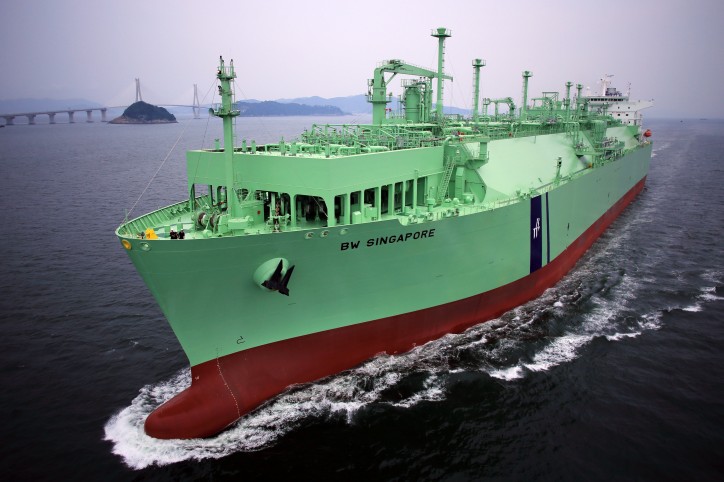
BW is a leading international gas shipping company with more than 80 years of maritime energy transportation history, 40 years of operational experience in LNG, and a current fleet of 21 LNG carriers including newbuildings. BW is the world’s largest owner and operator of Very Large Gas Carriers and a leading player in tankers and Floating Production Storage and Offloading units (FPSOs). BW’s first FSRU, the BW Singapore, is currently involved in a five-year contract providing LNG regasification and storage services in Egypt.
PGPL is part of Associated Group (AG), one of Pakistan’s business houses specializing in the energy sector. Established in 1965, AG is today the country’s largest gas processor in the private sector, and represents both the largest investment made so far in Pakistan’s LPG sector and the most expansive nationwide LPG bottling, transportation and marketing network. AG also has interests in power generation, construction, and media.
Source: BW group
BW’s state-of-the-art FSRU, Hull No. 2118 and currently at Samsung Heavy Industries (SHI) in Korea, will be utilized for this project. To be delivered in 4Q2016, the vessel offers a low environmental footprint, high efficiency, storage capacity in excess of 170,000m3 and a peak regasification capacity of 750mmscfd.
“We are proud to be selected as the FSRU supplier for the Pakistan project,” says Yngvil Åsheim, Managing Director of BW LNG. “BW is a leading player in the LNG sector, and we will leverage on our many years of experience to support Pakistan as they build their second LNG terminal. We look forward to a strong partnership with Pakistan GasPort and to delivering our commitments on time and at the highest quality.”
“We are delighted to be working with BW on this vitally important infrastructure project, which is the result of policies aimed at promoting investment and the renewed global faith in our country’s economy,” says Iqbal Z. Ahmed, Chairman of PGPL. “This landmark project will reduce Pakistan’s gas deficit by 30 percent, ensure fuel for 3,600 megawatts of new power generation plants being constructed in Pakistan to reduce power outages by 80 percent, and save some $1.5 billion in annual foreign-exchange savings.”
The project will be commissioned by 30 June 2017, at Port Qasim, Karachi.
BW is a leading international gas shipping company with more than 80 years of maritime energy transportation history, 40 years of operational experience in LNG, and a current fleet of 21 LNG carriers including newbuildings. BW is the world’s largest owner and operator of Very Large Gas Carriers and a leading player in tankers and Floating Production Storage and Offloading units (FPSOs). BW’s first FSRU, the BW Singapore, is currently involved in a five-year contract providing LNG regasification and storage services in Egypt.
PGPL is part of Associated Group (AG), one of Pakistan’s business houses specializing in the energy sector. Established in 1965, AG is today the country’s largest gas processor in the private sector, and represents both the largest investment made so far in Pakistan’s LPG sector and the most expansive nationwide LPG bottling, transportation and marketing network. AG also has interests in power generation, construction, and media.
Source: BW group

